

Mobility Challenge
Original challenge: How might Stockholms Stad design our mobility offerings so people choose a life without a private car?
Challenge from: Exploateringskontoret, City of Stockholm
Redefined challenge: How might we transform the start and end of the housing development process into a collaborative system with clear roles and shared responsibility, where mobility is foundational?
Solution: Co-Lab
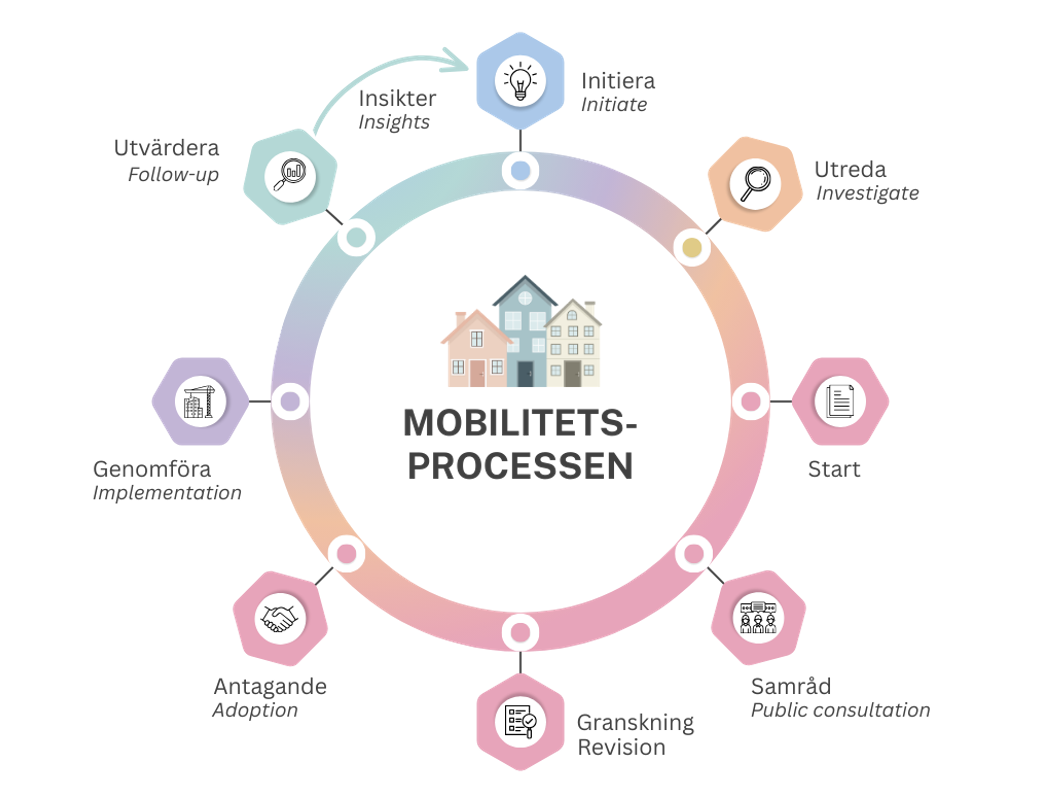
Concept: Co-Lab redefines mobility provisions through an app solution. It introduces an insight based infrastructure that both supports residents’ access to housing and mobility services and enables continuous learning within the housing development process. Through this, the concept seeks to increase the decision capacity of all involved stakeholders by establishing clearer roles, shared responsibility, and ownership without expanding their formal mandates.
Team: Fast & Curious
Cláudia Abreu, Edgar Gulay, Fredrik Uliana Mölleby, Marie Krausser, Sara Dinwiddie, Savithri Sellapperumage.
Report abstract
This report explores how car-free living can become a natural part of everyday life in Stockholm’s new housing developments. Within the Openlab master’s course, our interdisciplinary team collaborated with Exploateringskontoret to investigate how Stockholm’s Stad might design mobility offerings so people choose a life without a private car.
Using the Double Diamond Design Thinking framework, we conducted interviews, a workshop, surveys, literature research, mapping housing development journey, building and testing prototypes to understand residents’ mobility habits, coordination challenges between stakeholders and more importantly to understand the housing development process.
Our findings show that the main barriers to sustainable mobility were systemic and embedded in the planning process and not only social, behavioural and infrastructural. To address these barriers, we developed four initial concepts – Bo-Hive, Tra-Fika, Co-Lab, and Re-Place – that aim to enhance collaboration, ownership, awareness and community engagement. Insights from the concepts suggested that the housing development process required systemic improvements during the start and the end of the planning process.
Thus, the two concepts, Co-Lab and Bo-Hive, inspired by the design thinking iterative process, were integrated and further developed to introduce insight-based decision-making and continuous monitoring into the housing development process, strengthening stakeholder accountability and creating the conditions necessary for mobility measures to function effectively. Together, this concept illustrates how sustainable mobility can be reframed as a collective, and appealing choice for Stockholm’s residents.
Project presentation video
A project by: Cláudia Abreu, Edgar Gulay, Fredrik Uliana Mölleby, Marie Krausser, Sara Dinwiddie, Savithri Sellapperumage
